
Chlorine and chloramine
CleanLine Water Co. Whole Home Carbon Water Filter in Austin, TX
Austin, Round Rock, Georgetown and most Central Texas utilities disinfect with chloramine. Catalytic carbon is what actually removes it, and it does it at every tap, not just the kitchen.
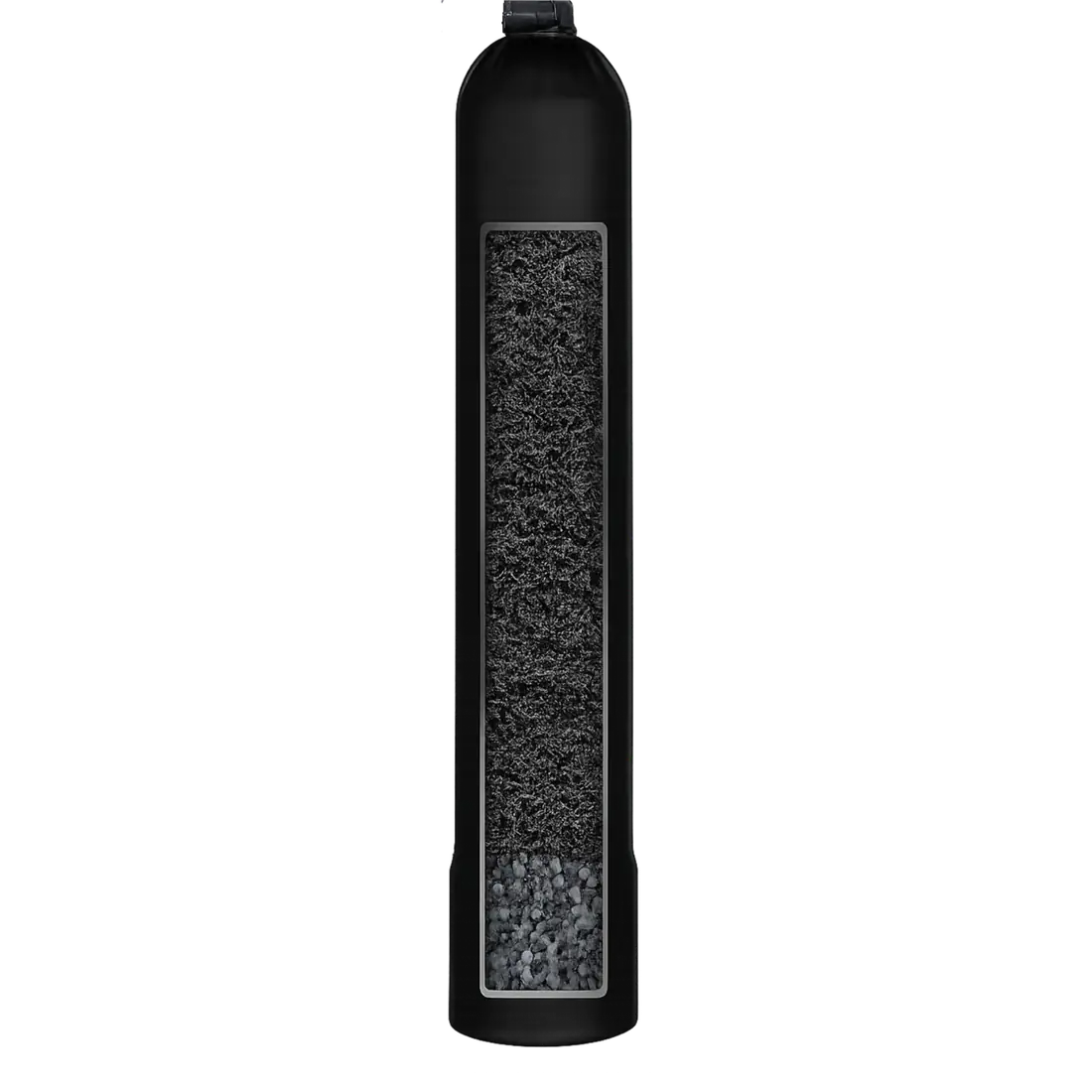
- Removes chlorine, chloramine, taste and odor at every fixture
- Catalytic carbon, not standard carbon, for chloramine
- Backwashing valve keeps the bed clean and flow steady
- No cartridges to buy, the media bed does the work
Benefits and treatment scope
Taste-and-odor filtration for more than the kitchen
A dedicated carbon filter treats water on the main household line. Its primary role here is disinfectant-related taste and odor; it can be installed alongside an existing softener because carbon and resin perform different jobs.
Improve disinfectant-related taste
Appropriate carbon media reduces the disinfectant-related taste and odor targeted by the selected system. The utility's disinfectant and treatment flow influence media selection.
Treat bathing and washing water
A point-of-entry filter serves the connected showers and household fixtures, not just a refrigerator dispenser. Any unfiltered branches depend on the plumbing layout.
Keep hardness treatment separate
If a working softener already handles scale, a dedicated carbon vessel can add filtration without replacing that softener solely for a taste concern.
A media bed instead of small cartridges
A backwashing vessel uses a larger carbon bed with its own service requirements. Automatic backwashing helps manage the bed; it does not restore exhausted adsorption capacity indefinitely.
How the equipment works
Water passes through a carbon bed that addresses selected taste-and-odor compounds. Catalytic carbon can be selected for chloramine treatment where appropriate. Performance depends on the actual media, bed size and contact time, so not all carbon systems are equivalent.
What it does not do
Carbon does not remove calcium and magnesium hardness or substitute for UV/RO. Do not assume removal of every chemical or health-related contaminant without model-specific performance documentation. It reduces disinfectant residual but does not disinfect downstream plumbing.
What we confirm before installation
We confirm the utility or well source, existing treatment, line size and simultaneous demand. A backwashing model needs an approved drain route and control-valve power. Equipment order and bypass access are planned with the existing softener rather than assumed.
Ongoing care and service
Check valve operation and watch for recurring taste or odor and pressure changes. Keep a service record for the media bed; carbon eventually needs replacement based on conditions and performance. A backwash cycle is cleaning, not a replacement for exhausted media.
Specifications
- Media
- Catalytic granular activated carbon with a gravel support bed; component documentation confirmed for the supplied media
- Target
- Chlorine, chloramine, disinfection byproducts, taste and odor
- Valve
- Backwashing control valve, scheduled automatic cleaning
- Media life
- Typically five to seven years on municipal water
- Placement
- Main line or softener loop, ahead of the softener
- Install
- Two to three hours by a licensed plumber
Who this system is built for
- Austin metro homes with a strong pool smell at the shower
- Households primarily concerned about disinfectant-related taste and odor
- Homes that already have a softener and want filtration added
- Anyone protecting a reverse osmosis membrane from chloramine
Why chloramine needs catalytic carbon
Chloramine is chlorine bonded to ammonia. It is far more stable than free chlorine, which is exactly why utilities across Central Texas use it, and exactly why an ordinary carbon block barely touches it.
Catalytic carbon has a surface chemistry built to break that bond. It is the difference between a filter that reduces the smell and one that removes the cause.
What changes in the house
The shower stops smelling like a pool deck, coffee and tea taste cleaner, and skin and hair stop drying out the way they do under chloraminated water.
Rubber seals, washer hoses and toilet flappers also last longer once the oxidizer is out of the line.
Pairs with softening
Carbon handles chemistry, softening handles hardness. The CleanLine Water Co. XL system puts both jobs into one install, which is why most Austin homes choose it over a standalone tank.
Warranty and guarantee
Eligible tanks and dry parts carry lifetime coverage. The backwashing control valve, circuit board and filtration media carry 5 years under the applicable terms. Media is assessed for service as conditions require; installation workmanship carries 1 year.
Read the full warrantyFrequently asked questions
Does a carbon filter soften my water?
No. Carbon removes chlorine, chloramine, taste and odor. Hardness needs a softener or a salt free conditioner.
How long does the carbon media last?
Five to seven years is typical on Austin metro municipal water. We test and confirm at your annual system check.
Are there cartridges to replace?
No. This is a media tank with a backwashing valve, so there is nothing to buy between media changes.