Private wells
CleanLine Water Co. Well Water Treatment Systems in Central Texas
Well water is a different problem than city water. Iron staining, sulfur smell, sand and extreme hardness all have to be handled in the right order, and that order depends on what your well is doing.
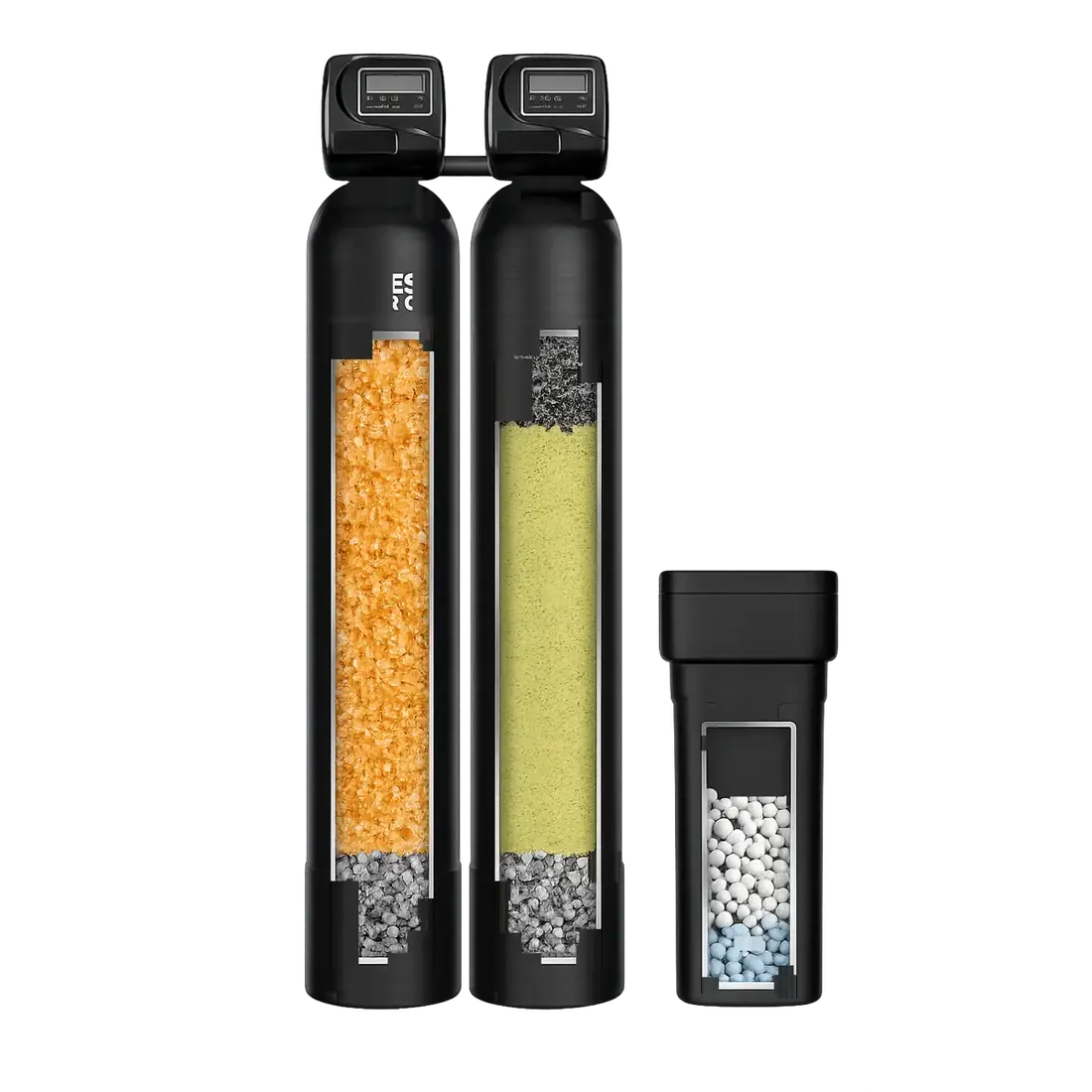
- Removes iron staining, sulfur odor, sand and sediment
- Softening stage sized for high grain well hardness
- Big housing pre-filter protects every downstream stage
- Pairs with UV disinfection where bacteria is a concern
Benefits and treatment scope
Build the treatment order around the well sample
A private well can need several different kinds of treatment. CleanLine's well-water approach considers sediment, iron and sulfur odor, hardness and any separately identified disinfection need, rather than assuming a city-water package will handle everything.
Keep grit out of downstream equipment
A properly selected sediment stage captures particles before they reach valves, softening resin and fixtures. Cartridge selection depends on the sediment load and available flow.
Address staining and sulfur odor
Oxidation and filtration can address iron-related staining and hydrogen sulfide odor when selected for the measured chemistry. A hot-water-only odor should also prompt an evaluation of the water heater.
Protect the softening stage
Treating problematic iron and sediment ahead of the softener helps reduce resin fouling. The softener can then focus on hardness rather than being used as a catch-all filter.
Add protection only where needed
UV can be considered for an identified microbiological need, and tankless RO for drinking water. Neither stage should be presented as a replacement for evaluating the well itself.
How the equipment works
The documented approach starts with sediment control, followed by any required oxidation/iron and odor treatment, then softening. Optional UV is placed after adequate pretreatment, while drinking-water RO sits at the kitchen. The final sequence and equipment depend on the sample and selected models.
What it does not do
Clear water and the absence of odor do not prove a well is microbiologically safe. Hardness, iron and odor measurements are not a complete drinking-water analysis. Unidentified contaminants need appropriate testing and a treatment recommendation tied to the results.
What we confirm before installation
We review the well and pressure-tank arrangement, pump flow, operating pressure, raw-water analysis, drain/backwash capacity and equipment location. The well must be able to support the selected filters' cleaning requirements. Electrical work, chemical feed and disinfection equipment are specified only when included in the written quote.
Ongoing care and service
Service intervals follow actual sediment and iron loading, not a city-water calendar. Check cartridges, salt, valve operation and any feed system included in your installation. Retest when source conditions change and follow appropriate well-water testing guidance separately from equipment maintenance.
Specifications
- Stage one
- Big housing sediment pre-filter for sand, silt and grit
- Stage two
- Oxidizing filtration tank for iron and sulfur odor
- Stage three
- Softening tank sized to measured well hardness
- Optional
- UV disinfection and tankless RO drinking water polish
- Install
- Well house, garage or utility room, one day typical
Who this system is built for
- Acreage wells around Dripping Springs, Wimberley, Bulverde and Spring Branch
- Homes with orange staining in sinks, tubs and laundry
- Rotten egg smell at the hot water tap
- Properties with visible sand or grit in aerators
Order of operations matters on a well
Putting a softener in front of iron and sediment is the most common well water mistake we are called out to fix. The resin bed fouls, capacity collapses and the homeowner ends up replacing media that never needed to fail.
We stage the system so the roughest work happens first: sediment, then oxidation for iron and sulfur, then softening, then any final polish for drinking water.
- Sediment pre-filtration on the pressure tank outlet
- Iron and sulfur oxidizing filtration
- Metered softening for hardness
- Optional UV and reverse osmosis for drinking water
Every well gets tested first
There is no standard well in Central Texas. Two properties on the same road can pull very different iron, hardness and sulfur numbers depending on depth and formation.
We test at the tap, review the results with you and build the quote around the actual chemistry. If your well only needs sediment and softening, that is what we quote.
Warranty and guarantee
Eligible tanks and dry parts carry lifetime coverage; control valves, circuit boards and filtration media carry 5 years under the applicable terms. Installation workmanship carries 1 year. Optional UV, chemical-feed and RO equipment have their own manufacturer terms; RO coverage is 1 year.
Read the full warrantyFrequently asked questions
Will this fix rotten egg smell from my well?
Yes. Sulfur odor is handled by the oxidizing filtration stage, and we confirm the source at the test since a smell only on the hot side can point to the water heater anode instead.
Do I need UV disinfection?
Only if your well tests positive for coliform or you want the extra assurance. We quote it as an add on rather than bundling it by default.
How often does well equipment need service?
Plan on a sediment cartridge every six to twelve months on a well, plus salt for the softener and an annual system check.