
Hardness only
CleanLine Water Co. Whole Home Water Softener Installation in Austin, TX
The single tank answer to Central Texas limestone. If your only complaint is scale, spotted glassware and stiff laundry, this is the system that solves it.
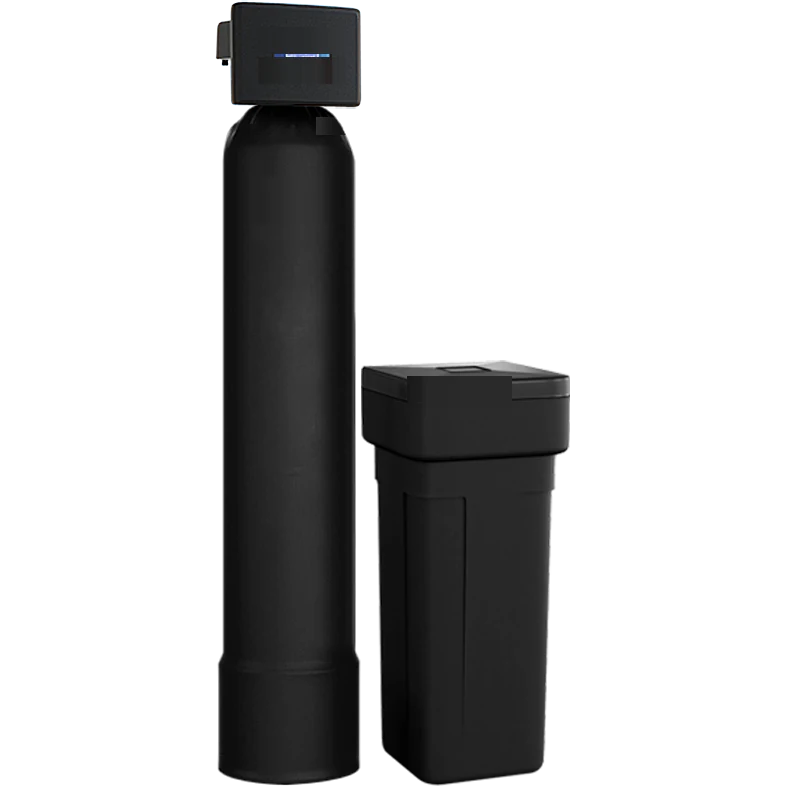
- Removes calcium and magnesium hardness at every tap
- Metered valve regenerates on water use, not on a timer
- 10% crosslink NSF certified resin for longer bed life
- MADE IN THE USA with a LIFETIME WARRANTY on tank and valve
Benefits and treatment scope
Remove hardness before it reaches your household fixtures
A dedicated whole-home softener focuses on calcium and magnesium hardness. It uses a resin tank, a metered control valve and a brine tank, making it a different tool from a carbon filter or a salt-free conditioner.
Limit new scale deposits
Ion exchange reduces the hardness minerals entering treated plumbing. Water heaters, shower fittings and dishwasher surfaces then receive water with less potential to form mineral deposits.
Reduce hard-water soap residue
Calcium and magnesium react with soap. Removing them can improve lathering and reduce soap scum, without guaranteeing that all spots or cleaning needs disappear.
More consistent washing water
Treating the household line rather than a single tap extends the benefit to bathing and laundry. Which fixtures receive softened water depends on the home's plumbing and any bypassed branches.
Program for actual consumption
A metered valve allows regeneration to be based on use and measured hardness. Household size and simultaneous demand are reviewed before setting capacity and reserve.
How the equipment works
Resin exchanges calcium and magnesium ions for sodium. As resin capacity is used, brine from the salt tank regenerates the bed and the valve rinses it before service resumes. The unit needs both a replenished salt supply and a suitable drain connection.
What it does not do
Softening does not remove chlorine/chloramine taste, disinfect water or provide RO-level dissolved-solids reduction. It can add sodium to treated water. If sodium intake matters to your household, discuss drinking-water treatment rather than assuming softened water is sodium-free.
What we confirm before installation
We confirm hardness at the address, usage, peak flow, service-line size and which outdoor or kitchen branches should remain untreated. An existing loop must be inspected; a new loop, drain and power arrangements are defined in writing before installation.
Ongoing care and service
Keep salt above the level recommended for the installed brine tank, inspect for bridging and check the control valve's time/settings after a power interruption. If hardness returns, check salt and bypass position and arrange a performance check before assuming the resin has failed.
Specifications
- Media
- 50 lbs of 10% crosslink food-grade softening resin; component documentation confirmed for the supplied media
- Control valve
- Programmable metered valve set to your address hardness
- Brine tank
- Matching black cabinet brine tank with safety float
- Salt use
- Typically one to two bags a month for a family of four
- Placement
- Garage or exterior softener loop
- Install
- About half a day with a licensed plumber on site
Who this system is built for
- Austin metro homes on municipal water with a stubbed softener loop
- Households whose main complaint is scale and dry skin
- Rentals and smaller homes that do not need carbon filtration
- Replacing a failed softener from another brand
What softening actually changes in a Central Texas home
Hardness varies by utility and address. Calcium and magnesium can contribute to mineral deposits and soap residue, so the system is sized to measured conditions rather than a metro-wide estimate.
Ion exchange trades the calcium and magnesium for sodium so nothing is left behind to scale. Soap lathers, glassware clears and the water heater stops burning gas through a layer of rock.
- Less new hardness scale in the kettle, shower and dishwasher
- Less soap, shampoo and detergent for the same result
- Longer life on water heaters, ice makers and coffee equipment
- Softer laundry without extra fabric softener
Sized to your water, not to a catalog
We test hardness at your tap and program the valve to the number we measure, so the system regenerates on actual usage instead of a generic schedule. Undersized systems run out mid week and oversized ones waste salt.
If your water also smells of chlorine or chloramine, the XL system pairs softening with catalytic carbon in the same install and is usually the better buy.
Warranty and guarantee
Eligible resin tanks, brine tanks and dry parts carry lifetime coverage. The control valve, circuit board and filtration media carry 5 years under the applicable terms. Salt and other consumables are separate; installation workmanship carries 1 year.
Read the full warrantyFrequently asked questions
Will a softener alone remove chlorine taste?
No. Softening handles hardness. Chlorine and chloramine need catalytic carbon, which is what the CleanLine Water Co. XL system adds in the same footprint.
How much salt will I use in Austin?
Most Austin metro families of four use one to two bags a month depending on measured hardness and water usage.
Can you install if my house has no softener loop?
Yes. Our licensed plumber can add a loop at the main line. We ask about your main-line access over the phone and include any additional plumbing in the quote.